Bank collapse is far from over, says well-known and seasoned market analyst

Did you think that the banking collapse and its effects have slowly faded and the situation has calmed down? Then, according to a leading economist, you are terribly mistaken and you may yet be surprised at what lies ahead.

Raghuram Rajan warns that the banking crisis may not be over
According to leading economist Raghuram Rajan, despite the drop in volatility in recent weeks, the banking sector's problems are not over and there may be more meltdowns to come.
Rajan, who previously served as chief economist at the International Monetary Fund and was among the experts who predicted the 2008 financial crisis, pointed to the problems of regional banks that spooked the world last month. In recent weeks, the turmoil has calmed down as US banks have recovered, but the crisis is not over. At least according to Rajan.
"I hope for the best, but I expect there may be more to come, in part because some of the things we've seen were unexpected," he said. "The whole concern is that very easy money and high liquidity over a long period of time create perverse incentives and perverse structures that become fragile when you turn everything around."
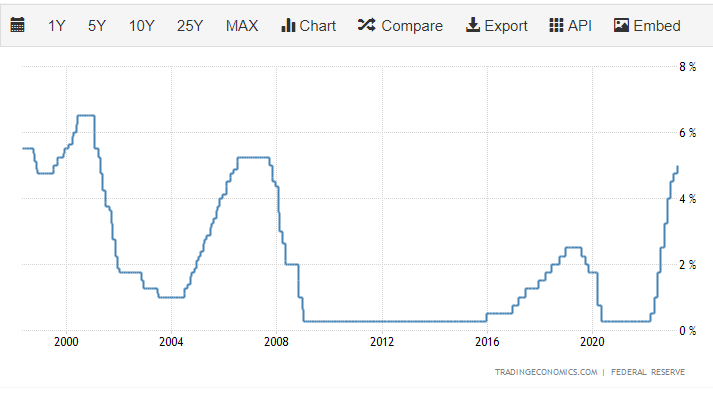
Extremely low rates and easy money have been with us for a dangerously long time, according to Rajan. Source
He added that the Fed is now trying to curb the market's "addiction" to too much liquidity, which has made the financial system fragile.
Who is Raghuram Rajan?
Raghuram Rajan is an Indian economist and former Governor of the Reserve Bank of India (RBI). He is considered one of the most influential economists of our time for several reasons. As early as 2005, Rajan warned about the risks associated with derivatives and mortgages and the possibility of a global financial crisis. His warnings were seen as overly pessimistic, but time has proved him right.
During his tenure at the RBI, he pushed through a series of reforms that increased the transparency, independence and accountability of the central bank. He introduced inflation targeting, more transparent monetary policy and better supervision of banks.
Moreover - this is not the first time he has criticised the Fed. Rajan criticized the US central bank's zero interest rate and quantitative easing policies, which he said led to excessive easing and the creation of a financial bubble. He called for a return to a more traditional monetary policy.
Rajan is the author of the best-selling book "Fault Lines" about the global financial crisis and its aftermath. His books and academic papers are among the most cited in the field.
https://www.youtube.com/watch?v=b9aIFzPgBYw
Disclaimer: This is in no way an investment recommendation. It is purely my summary and analysis based on data from the internet and other sources. Investing in the financial markets is risky and everyone should invest based on their own decisions. I am just an amateur sharing my opinions.